

Thinking Bee Obstacles
Learn to catch bias and noise before they shape the wrong decision
Why bias, noise and emotion are so hard to catch
Good thinking doesn't usually fail because people aren't capable of it — it fails because everyone is subject to invisible forces that quietly distort even well-intentioned decisions. Bias, noise and emotion operate beneath conscious awareness, shaping conclusions before we've had a chance to question them. We know these obstacles exist in principle, but very few teams have ever practised catching them in the moment.

The challenge is threefold:
It's invisible in the moment
Bias and noise don't feel like bias and noise from the inside — they feel like expertise, confidence, instinct or "just seeing it clearly."
It gets mistaken for good judgement
Certainty often reads as competence. The more confidently a view is stated, the less it gets questioned — even when that confidence isn't warranted.
Pressure and group dynamics amplify it
Under time pressure, teams default to shortcuts. One confident voice anchors everyone else, and dissenting views can quietly get filtered out.
Why games work
Spotting bias and noise in real time requires awareness and practice
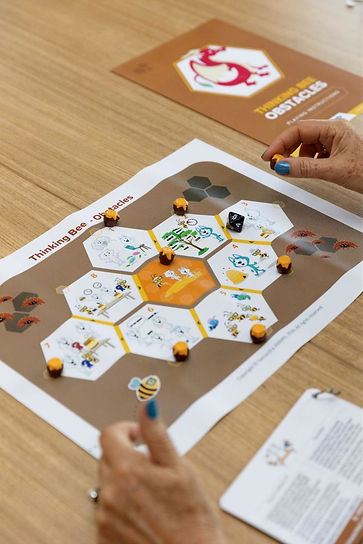
A game-based approach puts teams inside realistic decision scenarios where these obstacles actually show up — so they learn to recognise the pattern live, not just describe it afterwards. Games create the conditions for that recognition in a way that a lecture on bias and noise never can.

Learning by doing
Teams work through a realistic scenario where bias and noise are quietly at play, and have to identify where and how they're shaping the outcome — while it's happening, not in hindsight.
Safe to fail
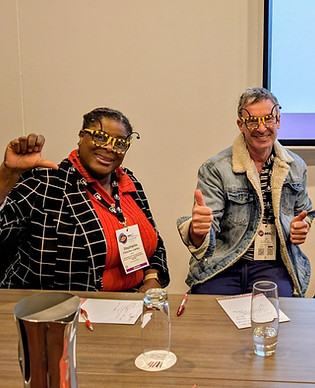
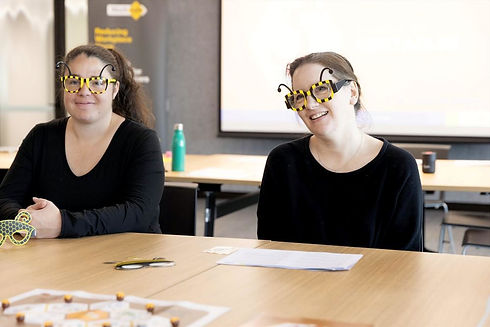
Being "caught out" by your own bias can feel exposing. The game gives teams permission to notice it, name it and laugh about it — without real-world consequences riding on the decision.

Builds a shared language
Teams leave with a shared vocabulary for naming what's happening in the room — so "I think we're anchoring on Andrew's view" becomes something a team can actually say out loud.
After participating in the Thinking Bee Obstacles game, teams report:
Greater awareness of their own blind spots and default patterns
More rigorous, less reactive group decisions
A shared vocabulary for naming bias and noise when they see it
Skills that carry over directly into decision-making work


Please review the Course Privacy Policy and Training Agreement

Facilitator's course - Basic
149
Every year
Online step-by-step course
Facilitator guide
Presentation videos
Facilitator PowerPoint pack
Community of practice
Reflection and feedback tools
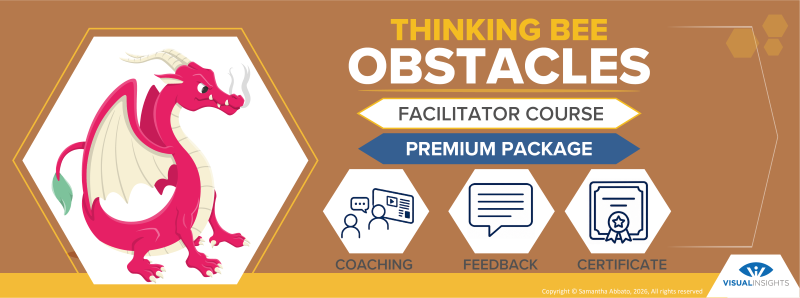
Facilitator's course - Premium
249
Every year
Online step-by-step course
Facilitator guide
Presentation videos
Facilitator PowerPoint pack
Community of practice
Reflection and feedback tools
Two live group coaching sessions
Creator feedback
Certificate of completion
Choose your package
Find one that works for you
Note - Course prices are in AUD.