

Ready, Set, Evaluate
Know you're truly ready to evaluate — before you start
The readiness check most evaluations skip
Most evaluations don't fail on analysis — they fail on timing, started before the program, the people or the data were genuinely ready. Teams often assume the data exists, that stakeholders are on board, and that the program's logic is settled enough to evidence against. By the time gaps surface, the evaluation is already underway and much harder to fix.

The challenge is threefold:
Data readiness gets assumed, not checked
Teams assume the data exists and is fit for purpose — until the evaluation is underway and the gaps become everyone's problem.
People readiness gets overlooked
Stakeholders who haven't been briefed or brought in early are far more likely to resist or disregard the findings once they arrive.
Program readiness gets taken for granted
A program can look stable on paper while its goals or scope are shifting — and evaluating too early locks in something that's about to change.

Why games work
Ready, Set, Evaluate is a race, not a lecture.
Teams roll to advance, drawing readiness cards across program, people and data — but a card only moves forward once the team judges the idea on it as genuinely sound and actionable. That single rule does the real work: it forces teams to practise evaluative judgement in real time, card by card, rather than agreeing with a checklist read out loud.

Learning by doing
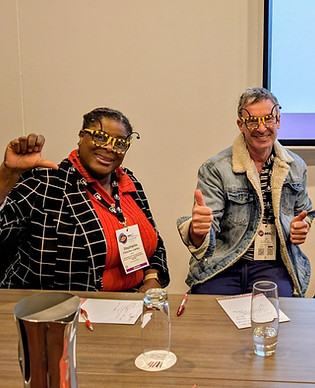
Teams work through a realistic readiness scenario, weighing up program, people and data readiness together — not ticking boxes in the abstract, but making a genuine call on whether it's actually time to evaluate.
Safe to fail
Missing a readiness gap in the game costs nothing but a laugh. Teams get to see what happens when a real gap is missed, without an actual evaluation being derailed by it.

Builds a shared language
Teams leave with a shared way of talking about readiness — program, people, data — that they can use back at work before committing to a real evaluation timeline.
After participating in Ready, Set, Evaluate, teams report:
Greater confidence assessing readiness before committing to an evaluation
Practical actions for closing readiness gaps, not just naming them
A shared vocabulary for talking about readiness across a team or organisation
Skills that transfer directly to planning and scoping real evaluations
Fewer false starts.
Evaluations built on solid ground.
Ready, Set, Evaluate gives your team a practical, shared way to check whether a program, its people and its data are genuinely ready — before the evaluation clock starts.
Join the teams already checking readiness properly, instead of finding out the hard way.


Please review the Course Privacy Policy and Training Agreement

Facilitator's course - Basic
149
Every year
Online step-by-step course
Facilitator guide
Presentation videos
Facilitator PowerPoint pack
Community of practice
Reflection and feedback tools

Facilitator's course - Premium
249
Every year
Online step-by-step course
Facilitator guide
Presentation videos
Facilitator PowerPoint pack
Community of practice
Reflection and feedback tools
Two live group coaching sessions
Creator feedback
Certificate of completion
Choose your package
Find one that works for you
Note - Course prices are in AUD.